
Key takeaways
- Set a budget and ask the seller these questions
- Verify the seller, VIN and title history
- Inspect the car before agreeing to buy
- Arrange a private-party loan and any seller lien payoff
- Agree a written price and verified payment process
To buy a used car from a private seller, verify the seller's authority to sell and the vehicle's VIN, check title history, arrange an independent inspection, agree a written price, and coordinate payment with the required title and lien documents. If you need a loan, confirm private-party eligibility with your lender before committing. Transfer requirements vary by state; do not pay on a promise that missing ownership documents will arrive later.
Jump to a section1 / 7
Set a budget and ask the seller these questions
Start with the amount you can spend after allowing for insurance, tax, transfer charges, inspection, immediate repairs and a reserve. The asking price is only one part of the purchase. Borrowing also adds interest and possibly fees. Keep your inspection money and repair reserve separate from the down payment so the first unexpected bill does not force another loan.
Ask for the VIN, current odometer reading, title status and service records before arranging a viewing. Confirm that the person meeting you is the owner or has documented authority to sell. An explanation that somebody else will sign later needs verification before you travel. Do not send a deposit simply to gain access to routine ownership information.
Ask why the vehicle is being sold, how long it has been owned, whether any lender has a lien, which faults or damage are known, and whether your chosen mechanic may inspect it. Ask which maintenance invoices are available and whether it is currently registered for a lawful test drive. Record the answers as claims to verify, rather than treating a confident description as evidence.
Verify the seller, VIN and title history
At the viewing, compare the VIN on the vehicle with the title and available records. Check the seller's identity against the ownership documents, allowing for legitimate name changes or an authorized representative only when the necessary evidence is available. Pause over alterations, unexplained discrepancies or pressure to leave buyer information blank. A bill of sale alone may not satisfy your state's ownership-transfer requirements.
Use NMVTIS consumer information to understand title-history reports and approved providers. Its records can identify reported title brands, odometer information and certain salvage or loss events; a report is not a complete accident, repair or mechanical history. Ask the relevant state agency how to investigate title questions and any unresolved lien. Check open safety recalls separately through NHTSA.
A clean-looking report cannot establish that every repair was disclosed or that the car is safe to drive. Compare service invoices, recorded mileage and inspection observations with the seller's answers. Keep permitted copies or notes without collecting unrelated identity information. If ownership remains unclear, postpone the transaction while the seller resolves it through the appropriate agency.
Inspect the car before agreeing to buy
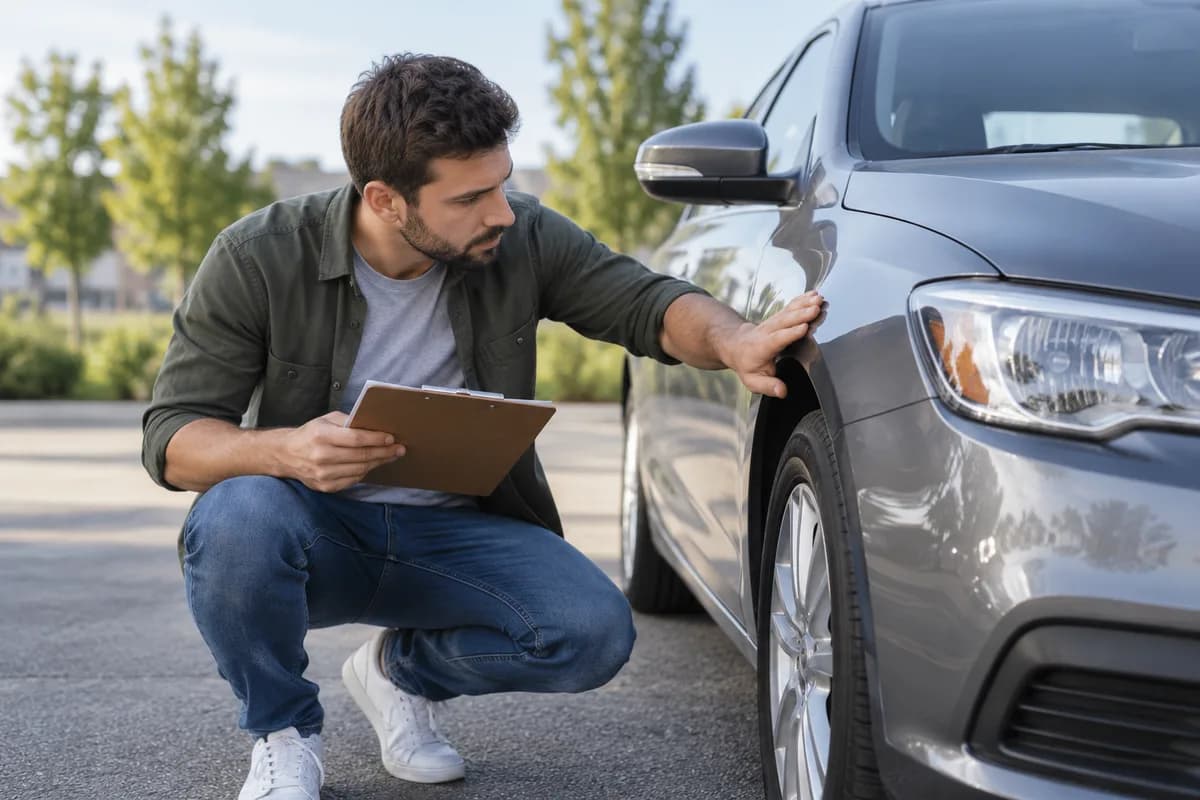
Arrange a daylight viewing, an appropriate test drive and an independent inspection with a shop you choose. Agree beforehand who pays and how the vehicle will reach the shop. Use the checklist to record observations about documents, bodywork, cabin, tires, warning lights and driving behavior. Do not crawl underneath an unsupported car or attempt a hazardous test to prove a fault.
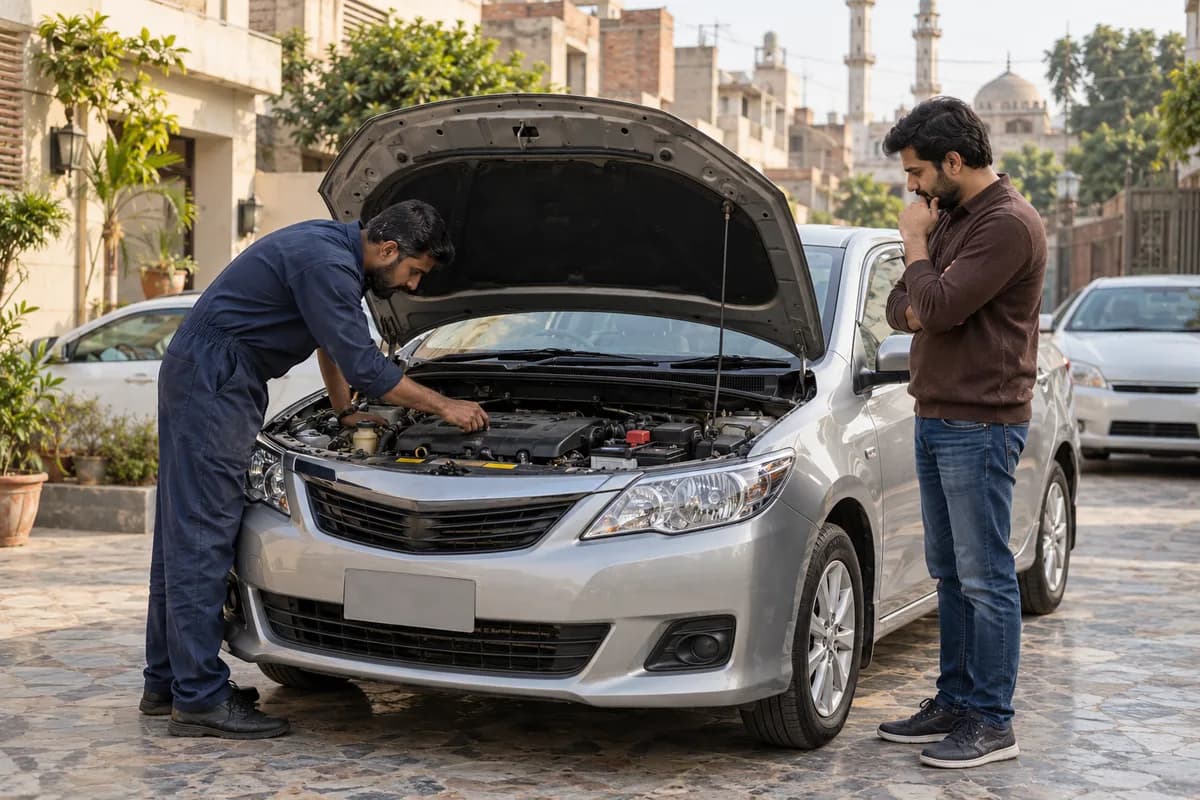
Ask the mechanic for written findings and estimates for work that affects your decision. A general inspection may require specialist follow-up for a high-voltage battery, suspected structural damage or unusual modifications. An inspection reduces uncertainty but cannot predict every future breakdown. If the seller refuses reasonable independent access, consider another vehicle rather than trying to replace the inspection with a short test drive.
Use the written findings when negotiating. Compare similar vehicles and avoid deducting a repair twice if your comparable price already reflects that condition. Decide whether you actually want to arrange the work, even at a discount. Unresolved safety or ownership concerns are reasons to pause; they do not become harmless because the seller reduces the price.
Put the guidance into practice.
Use your own numbers to explore the next step.
Used car inspection checklist Used car loan calculator with taxes and feesArrange a private-party loan and any seller lien payoff
If you need financing, ask your lender whether it funds private-party purchases and whether this vehicle meets its requirements. Confirm the approved amount, contract rate, APR, term, fees, required documents and how funds will be delivered. A general prequalification does not establish that a particular car or seller will be accepted. Do this before making a nonrefundable commitment.
When the seller still owes money, request a dated payoff and coordinate the transaction with the lienholder using contact details you independently verify. Ask who receives each portion of the purchase money, how any shortfall is covered, and when and to whom the released title will be delivered. Electronic titles and paper titles can require different steps. Do not assume the seller can hand you a clear title immediately after receiving your payment.
In a hypothetical $15,000 purchase with a verified $9,000 seller payoff, the agreed settlement might direct $9,000 to the lienholder and $6,000 to the seller, subject to the lender's process. If payoff is $16,000, the seller must resolve the $1,000 shortfall through an accepted arrangement. These are arithmetic examples, not instructions to send money before the parties have confirmed the transfer process in writing.
Agree a written price and verified payment process
Write down the VIN, agreed price, included items, known commitments and any conditions for completing or cancelling the purchase. Ask your bank which payment method and verification steps suit the transaction. Arrange the handoff with the bank, lienholder or relevant agency when their participation is needed. A meeting location by itself does not guarantee payment or proper ownership transfer.
The FTC warns that available funds from a deposited check do not prove the check is genuine. Confirm any payment arrangement through independently obtained bank contact details. Reject a request to overpay and return the difference. Screenshots, payment emails and pressure to act immediately are not substitutes for your bank's verification process. Discuss disputed or reversible payment risks with the institution before the handoff.
Budget government charges separately from the seller payment. For example, a hypothetical $15,000 car, $900 purchase tax, $250 transfer and registration charges, and $150 inspection require $16,300 before repairs or borrowing costs. None of those charges is a state fee quote. Use verified amounts for your registration location; some transactions use a taxable value or method that a simple percentage of the agreed price cannot model.
Complete the documents and handoff checklist
Check your own state's motor-vehicle agency for the current title, lien release, odometer disclosure, bill of sale, emissions or inspection evidence, tax and registration requirements. Verify required signatures, notarization if applicable, deadlines, insurance and any lawful temporary driving permission before collecting the vehicle. Do not assume that the seller's plates or insurance can be used for your drive home.
California's DMV, for example, lists seller or lienholder signatures for a private sale or loan payoff and distinguishes the buyer's title submission from the seller's Notice of Transfer and Release of Liability. That example is not a nationwide checklist. Missing titles, out-of-state cars, estates and other special situations may need additional documents or agency instructions. Confirm the process before funds and keys change hands.
Marks stay on this page and clear on reload. They record your notes; they do not certify the vehicle’s condition.
Frequently asked questions about buying privately
Use these answers to prepare questions for your bank, lender and state motor-vehicle agency. The exact documents and timing depend on the transaction.
Can I buy a used car from a private seller with a loan?
Yes, if a lender approves that transaction and vehicle. Confirm private-party eligibility, funding instructions and title requirements before committing. Our calculator estimates payment arithmetic; it cannot approve the purchase.
What is the safest way to pay a private seller?
Agree the method and verification process with your bank and coordinate it with title and lien requirements. There is no universally risk-free method. Do not rely solely on available check funds, screenshots, an unfamiliar intermediary or a promise of documents later.
What documents do I need to buy privately?
Check the registration state's current requirements. Expect to investigate ownership evidence, required seller and lienholder signatures, odometer disclosures, applicable sale or transfer forms, tax, registration and any inspection evidence. Special cases need additional checks.
Do I get a dealer Buyers Guide in a private sale?
The FTC's Used Car Rule concerns covered dealers; an ordinary private-party transaction does not automatically receive the same dealer paperwork or protections. Verify the sale agreement and applicable state law rather than assuming a dealer warranty or cancellation right applies.
Sources and further reading
- DOJ: NMVTIS consumer information ↗
- NHTSA: VIN safety recall lookup ↗
- CFPB: auto loan planning resources ↗
- FTC: fake-check and overpayment scams ↗
- California DMV: title transfers and lienholder signatures ↗
- FTC: dealer purchases and the Used Car Rule ↗
Examples are hypothetical unless explicitly stated. Prepared with AI assistance and source research; no independent professional review is claimed. Verify current rules and contract terms for your situation. Read the full disclaimer.
Save the guide, collect the missing evidence, and revisit your numbers before committing.