Key takeaways
- Determine Your Budget
- Research the Vehicle
- Verify Vehicle Documents
- Inspect the Exterior
- Inspect the Interior
Before you buy a used car, verify ownership, review the vehicle history, inspect its mechanical condition, take a test drive, compare market prices, and add up the full cost. Never pay until you've confirmed the documents needed to transfer ownership. This 10-step checklist walks a first-time buyer through each of those checks.
Jump to a section1 / 13
Step 1: Determine Your Budget
Count the car's price together with insurance, taxes, registration, maintenance, fuel, and financing.
Leave some savings untouched for unexpected repairs.
Step 2: Research the Vehicle
Research the exact model year, engine, transmission, and trim. Look up:
- Known reliability problems
- Manufacturer recalls
- Maintenance requirements
- Fuel economy
- Safety ratings
- Replacement-part availability
Step 3: Verify Vehicle Documents
Check the VIN, the ownership documents, and the registration records.
Make sure the seller has the legal right to transfer ownership.
Run the numbers before you decide
Plug in your own figures from a written offer.
Car affordability calculator: how much car can I afford? Used car inspection checklist: 25 things to checkStep 4: Inspect the Exterior
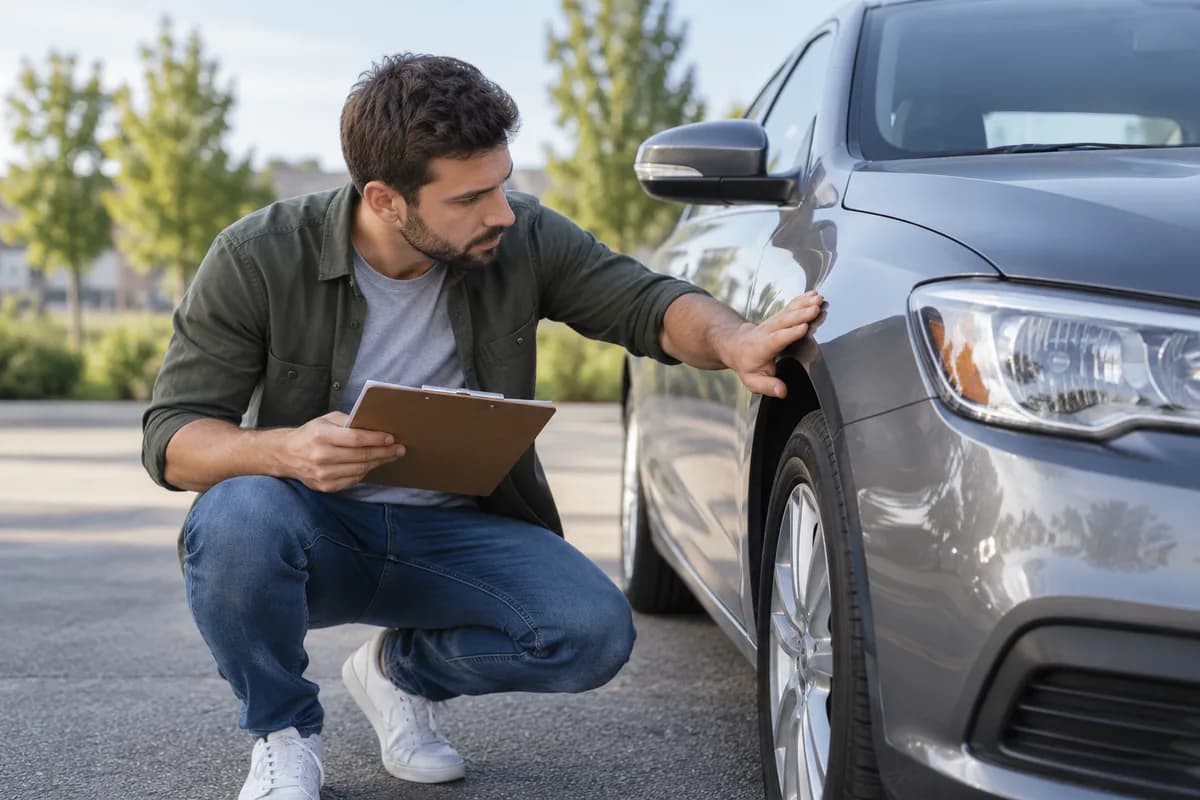
Look for mismatched paint, uneven panel gaps, rust, damaged lights, and uneven tire wear.
Any of these can point to past repairs or poor upkeep.
Step 5: Inspect the Interior
Test the air conditioning, dashboard controls, windows, locks, seatbelts, and other electrical features.
Ask about any warning lights, and look for signs of water damage.
Step 6: Inspect the Engine
Look for visible leaks, strange noises, signs of overheating, and neglect.
Stay clear of hot or moving engine parts.
Step 7: Test Drive the Car
Pay attention to:
- Acceleration
- Braking
- Steering
- Gear changes
- Suspension noises
- Dashboard warnings
- General driving comfort
Step 8: Arrange a Professional Inspection
An independent mechanic can spot problems a first-time buyer would likely miss.
Ask for a written report if you can get one.
Step 9: Compare Prices
Find similar cars with the same age, mileage, trim, and condition.
Use repair estimates to back up your offer.
Step 10: Complete the Purchase Securely
Read the purchase agreement and confirm every tax, fee, ownership record, and lien-release requirement.
Pay by a traceable method and follow the official transfer process.
Printable Used Car Buying Checklist
Use Print / save PDF above to keep a copy of this guide.
Marks stay on this page and clear on reload. They record your notes; they do not certify the vehicle’s condition.
Frequently Asked Questions
What should a first-time car buyer check first?
Start with your budget, the car's identity, its ownership documents, and available history records, before you arrange a detailed inspection.
Should I buy a used car without a warranty?
It can be reasonable, but you carry more repair risk without a warranty. Review the car's condition and the contract carefully.
What should I bring when buying a used car?
Bring the ID and documents your jurisdiction requires, a way to look up vehicle information, and your inspection checklist. Confirm payment and transfer requirements ahead of time.
Conclusion
A good first used-car purchase is one you understand financially, mechanically, and legally.
Run through this list every time, especially when a car looks like an excellent bargain.
Sources and further reading
Examples are hypothetical unless explicitly stated. Verify current rules and contract terms for your situation. Read the full disclaimer.
Save the guide, collect the missing evidence, and revisit your numbers before committing.