Key takeaways
- Choose the Country Where You Want to Buy
- Set Your Budget in Euros
- Research Suitable Used Vehicles
- Verify Vehicle Identity and Documentation
- Understand Technical Inspections in Europe
To buy a used car in Europe, research prices in your target country, verify the vehicle identification number and registration documents, review maintenance and inspection records, arrange an independent inspection, confirm applicable VAT and registration taxes, and complete the ownership transfer according to national requirements. If purchasing across borders, verify import, insurance, temporary plate, and registration requirements before paying.
Jump to a section1 / 18
Quick Answer: How Do You Buy a Used Car in Europe?
To buy a used car in Europe, research prices in your target country, verify the vehicle identification number and registration documents, review maintenance and inspection records, arrange an independent inspection, confirm applicable VAT and registration taxes, and complete the ownership transfer according to national requirements.
If purchasing across borders, verify import, insurance, temporary plate, and registration requirements before paying.
Which official resources should Europe (EU) buyers use?
Start with EU guidance, then confirm the exact requirements in the country of registration. This guide focuses on EU transactions; the UK, Norway, and Switzerland have different customs and registration arrangements.
Choose the Country Where You Want to Buy
Used car markets vary across Europe.
Germany
Germany offers a broad selection of vehicles from brands such as Volkswagen, BMW, Mercedes-Benz, Audi, and Opel.
Investigate maintenance records, inspection status, and export documentation when buying for another country.
France
France offers a variety of compact hatchbacks, family cars, and electric vehicles.
Check registration records, inspection documents, and available vehicle history information.
Spain
Spain has an active used vehicle market with compact cars, sedans, SUVs, and commercial vehicles.
Pay attention to registration-transfer requirements, applicable taxes, and the vehicle's ITV inspection status.
Italy
Italy offers a wide selection of compact cars and European models.
Verify ownership documentation, vehicle history, and any administrative restrictions before purchase.
Netherlands
The Netherlands offers used cars, hybrids, and electric vehicles across different price categories.
Review mileage records, technical inspection information, and registration requirements.
Put the guidance into practice.
Use your own numbers to explore the next step.
Used car inspection checklistSet Your Budget in Euros
Include the purchase price and all relevant expenses.
Example European Used Car Budget
These figures are hypothetical and should not be interpreted as current European averages.
Actual registration taxes can differ significantly between countries and vehicle types.
| Expense | Illustrative amount |
|---|---|
| Vehicle price | €12,000 |
| Registration and tax reserve | €800 |
| Insurance reserve | €700 |
| Inspection and servicing | €400 |
| Emergency repair reserve | €1,100 |
| Total | €15,000 |
Research Suitable Used Vehicles
Popular European-market models to investigate include:
Compare model years, engine variants, maintenance history, and emissions compliance.
- Volkswagen Golf
- Volkswagen Polo
- Renault Clio
- Peugeot 208
- Skoda Octavia
- Toyota Yaris
- SEAT Leon
- BMW 3 Series
- Mercedes-Benz C-Class
Verify Vehicle Identity and Documentation
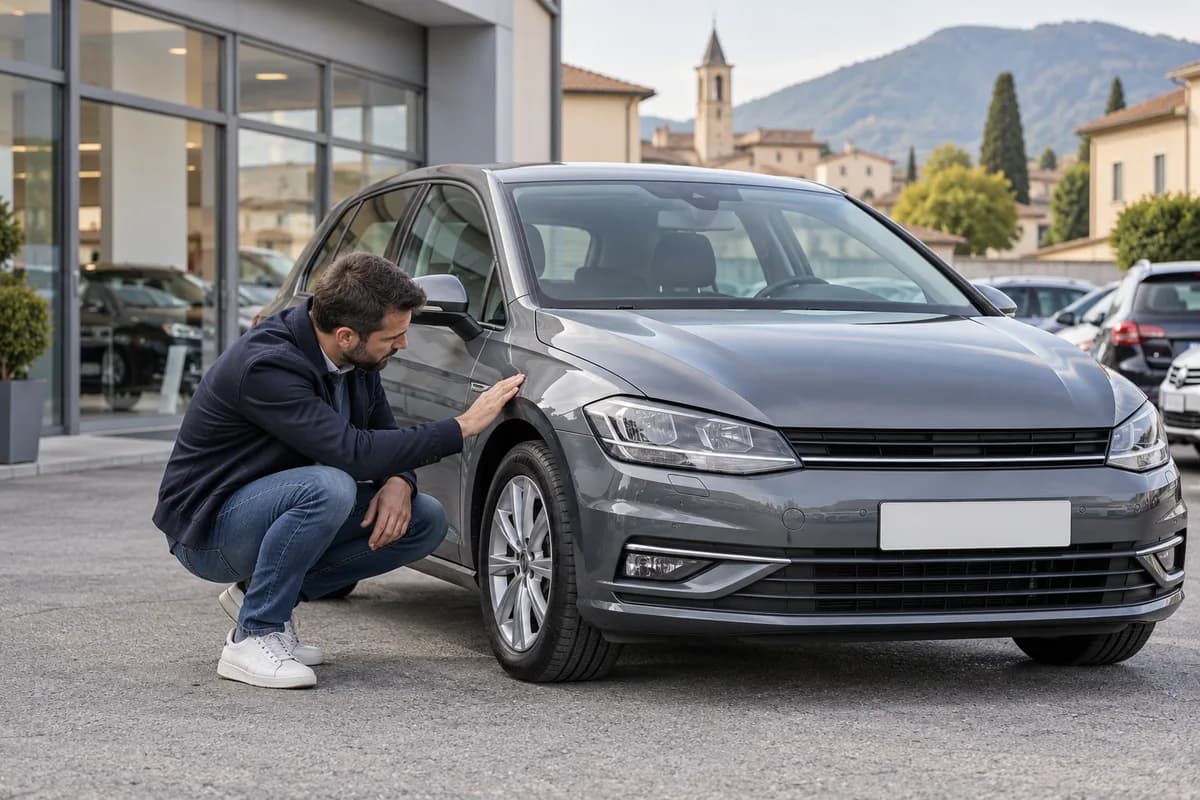
Before buying, request the VIN and relevant registration documentation.
Check that the seller is authorized to sell the vehicle.
Investigate:
The documents required vary by country.
- Ownership records
- Registration certificates
- VIN consistency
- Available mileage records
- Inspection history
- Outstanding finance or restrictions
- Previous damage
Understand Technical Inspections in Europe
Different European countries use different roadworthiness inspection systems.
Inspection validity and frequency depend on national rules, vehicle age, and classification.
A valid technical inspection does not replace a comprehensive mechanical assessment.
| Country | Inspection system |
|---|---|
| Germany | Hauptuntersuchung (HU), often called TÜV inspection |
| France | Contrôle technique |
| Spain | ITV |
| Italy | Revisione |
| Netherlands | APK |
Understand EU VAT Rules for Used Cars
VAT treatment is particularly important when buying a car in one EU country and registering it in another.
For EU VAT purposes, a vehicle generally qualifies as used only when both conditions are satisfied:
If either condition is not satisfied, it may be treated as a new means of transport for VAT purposes.
- It was first put into service more than six months ago.
- It has traveled more than 6,000 kilometres.
Buying From a Private Seller
A private sale of a qualifying used vehicle generally does not create a new VAT charge on that transaction.
Buying From a Dealer
VAT treatment may depend on the dealer's tax scheme and how the vehicle is sold.
The invoice may not show VAT separately.
Buying Across EU Borders
For a qualifying used vehicle already registered in the EU, bringing it to another EU member state generally does not create a second acquisition VAT charge for a private buyer.
However, registration taxes and other national charges may still apply.
Confirm the rules for your transaction with the relevant authorities.
Buying a Used Car in Germany for Another EU Country
Suppose you live in Spain and want to purchase a used car in Germany.
Before completing the purchase:
- Verify the vehicle's German registration documents.
- Review the technical inspection status.
- Check the VIN and maintenance history.
- Confirm the seller's ownership rights.
- Investigate the applicable VAT treatment.
- Arrange lawful transport or export plates.
- Obtain appropriate insurance.
Confirm Spanish registration and tax requirements.
Complete the registration process in Spain.
Do not assume that temporary plates issued in Germany will be accepted in every country along your route.
Many European cities operate environmental zones or other vehicle-access restrictions.
Requirements differ by city and country.
Investigate:
A used diesel vehicle may be affordable to purchase but unsuitable for some urban driving patterns.
Europe offers a substantial selection of used electric and hybrid vehicles.
Before buying an EV, investigate:
For plug-in hybrids, check both the combustion engine and high-voltage battery system.
- Check Emissions Standards and City Restrictions
- Vehicle emissions classification
- Diesel restrictions
- Low-emission-zone requirements
- Environmental stickers or permits
- Local registration requirements
- Consider Electric and Hybrid Vehicles
- Battery state of health
- Remaining battery warranty
- Charging connector compatibility
- Local charging availability
- Battery repair costs
- Software and charging-system condition
- Realistic driving range
Arrange an Independent Vehicle Inspection
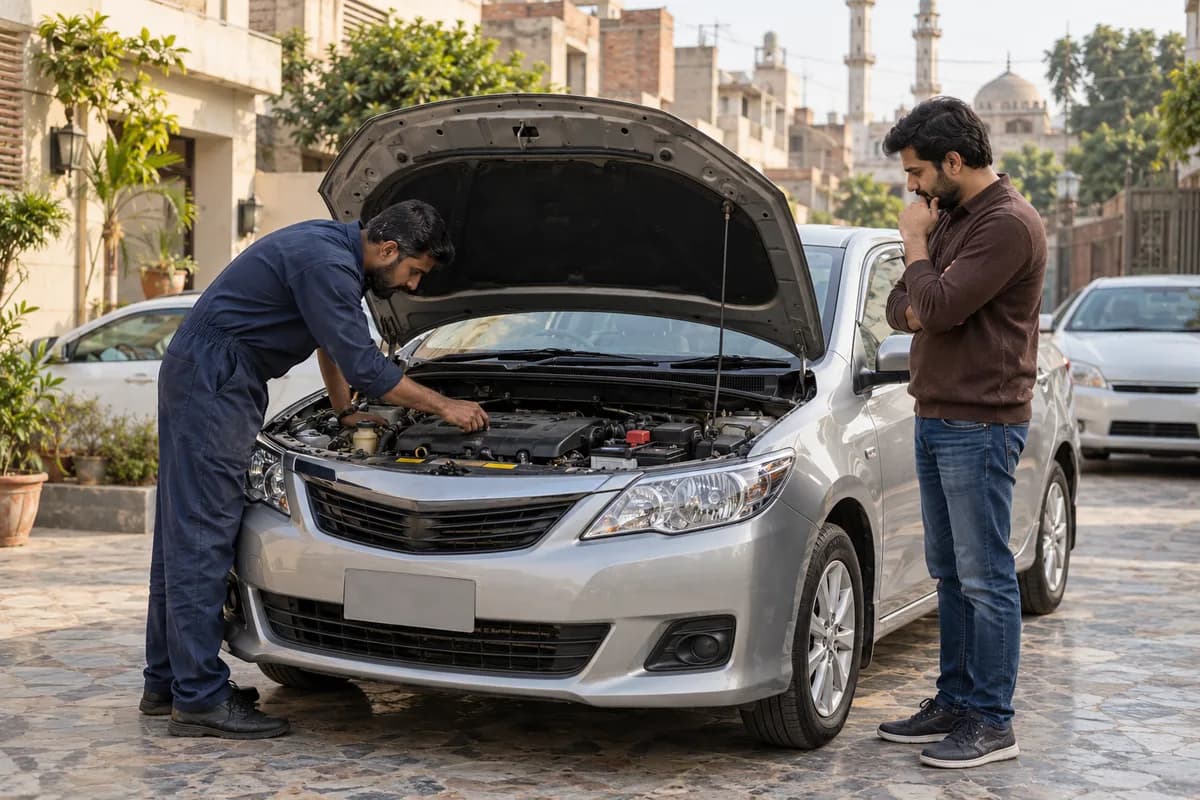
Ask a qualified technician to inspect:
Inspect the car before committing to a non-refundable payment.
- Engine or electric drivetrain
- Transmission
- Suspension
- Brakes
- Steering
- Tires
- Corrosion
- Previous structural repairs
- Electronic diagnostic systems
- Battery condition, where applicable
Understand Consumer Protection in EU Countries
Buying from a professional seller in the EU generally provides stronger consumer protections than buying from a private individual.
EU rules provide a minimum legal guarantee framework for consumer goods sold by traders.
For secondhand goods, member-state rules may allow a shorter agreed guarantee period, subject to a minimum of one year.
The exact rights and remedies depend on the country and transaction.
Private sales do not generally receive the same EU consumer protections as purchases from professional traders.
Complete Registration and Ownership Transfer
Registration procedures vary between European countries.
Depending on the transaction, you may need:
Verify the complete process with the country where the vehicle will be registered.
- Original registration certificates
- Purchase invoice or contract
- Identity documents
- Technical inspection evidence
- Insurance
- Certificate of conformity, where required
- Tax documentation
- Import or export documentation
- Temporary or permanent registration plates
Europe Used Car Buying Checklist
Marks stay on this page and clear on reload. They record your notes; they do not certify the vehicle’s condition.
Frequently Asked Questions
Can I buy a used car in Germany and register it in France?
Generally yes, subject to French registration, tax, documentation, and technical requirements.
Do I pay VAT twice when buying a used car in the EU?
A qualifying used vehicle generally does not create a second VAT charge simply because a private buyer brings it from one EU country to another. The exact treatment depends on the seller and transaction.
Which European country has the cheapest used cars?
There is no universally cheapest country. Prices vary by model, mileage, condition, demand, taxes, and transport expenses.
Can I buy a used car in Europe as a foreign resident?
It may be possible, but registration, insurance, identification, and residency requirements differ by country.
Is a German TÜV inspection enough to guarantee reliability?
No. A valid roadworthiness inspection does not guarantee that a vehicle has no hidden mechanical problems.
Are diesel cars still worth buying in Europe?
They may be suitable for certain drivers, particularly those covering substantial distances. However, investigate local emissions restrictions, maintenance costs, and future resale considerations.
What is the difference between EU and UK used car imports?
The UK is outside the EU customs union and single market. Moving a vehicle between the UK and EU can involve different customs, VAT, registration, and compliance requirements.
Conclusion
Buying a used car in Europe requires careful attention to national laws, registration documentation, technical inspections, and cross-border tax rules.
The safest approach is to research the exact country where the vehicle will be registered and calculate the full purchase cost before making a payment.
Explore our Used Car Buying Guides and compare ownership expenses using the Cost of Ownership Calculator.
Continue your buying research
Use the inspection checklist to record condition. The linked finance and ownership tools provide illustrative calculations with their displayed currency and assumptions; they do not calculate local taxes, PCP or HP agreements, or jurisdiction-specific fees.
Sources and further reading
- Your Europe: vehicle VAT when buying or selling abroad ↗
- Your Europe: car registration documents and formalities ↗
- Your Europe: consumer guarantees and second-hand goods ↗
Examples are hypothetical unless explicitly stated. Prepared with AI assistance and source research; no independent professional review is claimed. Verify current rules and contract terms for your situation. Read the full disclaimer.
Save the guide, collect the missing evidence, and revisit your numbers before committing.