Key takeaways
- Determine Your Total Budget
- Research Reliable Used Cars
- Compare Local Used Car Prices
- Check the Vehicle Identification Number
- Obtain a Vehicle History Report
To buy a used car safely in the United States, set your total budget, compare local prices, obtain a vehicle history report, check the title and VIN, investigate open recalls, arrange an independent inspection, review the total out-the-door price, and complete title and registration procedures required by your state.
Jump to a section1 / 18
Quick Answer: How Do You Safely Buy a Used Car in the USA?
To buy a used car safely in the United States, set your total budget, compare local prices, obtain a vehicle history report, check the title and VIN, investigate open recalls, arrange an independent inspection, review the total out-the-door price, and complete title and registration procedures required by your state.
Which official resources should USA buyers use?
Use federal resources for recalls and reported title history, then confirm transfer, tax, and registration requirements with your state agency.
Determine Your Total Budget
Consider:
- Vehicle price
- Sales or use tax
- Title and registration fees
- Dealer documentation fees
- Insurance
- Financing interest
- Maintenance
- Unexpected repairs
Example Purchase Budget
Actual costs vary by state, vehicle, seller, and insurance profile.
| Expense | Illustrative cost |
|---|---|
| Vehicle price | $18,000 |
| Taxes and fees | $1,500 |
| Initial maintenance | $500 |
| Inspection | $150 |
| Repair reserve | $850 |
| Total | $21,000 |
Put the guidance into practice.
Use your own numbers to explore the next step.
Used car inspection checklist Used car loan calculator with taxes and feesResearch Reliable Used Cars
Popular vehicle categories to compare include compact sedans, midsize sedans, SUVs, pickup trucks, hybrids, and electric vehicles.
Examples worth researching include:
Research the exact model year and powertrain rather than relying on a manufacturer's overall reputation.
- Toyota Corolla
- Honda Civic
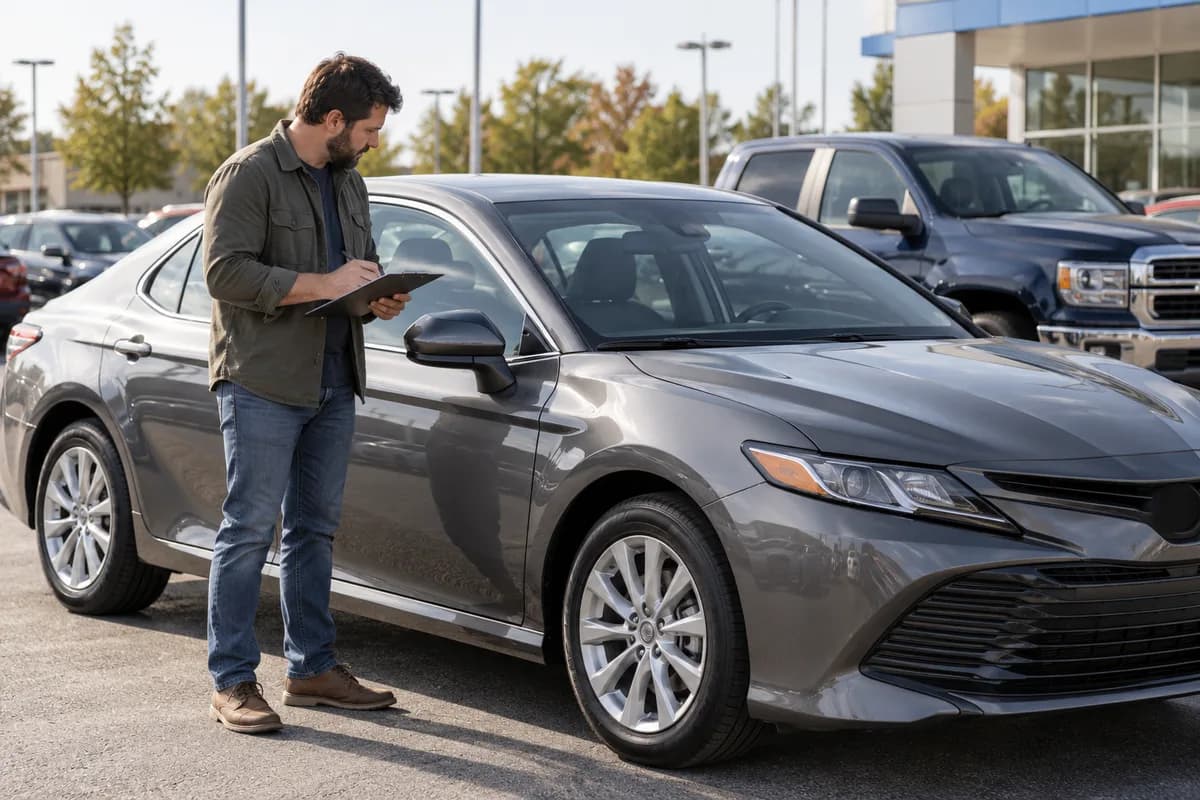
- Toyota Camry
- Honda Accord
- Honda CR-V
- Toyota RAV4
- Ford F-150
Compare Local Used Car Prices
Compare vehicles with similar mileage, condition, trim, and history.
Ask dealers for the complete out-the-door price, including mandatory fees and applicable taxes.
This makes offers easier to compare.
A lower advertised price may not represent the lowest final cost.
Check the Vehicle Identification Number
The VIN identifies the vehicle and helps buyers investigate available records.
Compare the VIN displayed on the vehicle with the title and other relevant documents.
Investigate inconsistencies before purchasing.
Obtain a Vehicle History Report
Vehicle history reports may contain:
Use an approved provider through the National Motor Vehicle Title Information System (NMVTIS) where appropriate.
Remember that no report contains every accident or repair.
- Previous title records
- Salvage information
- Reported accidents
- Recorded mileage
- Insurance loss records
- Available service information
Check for Open Safety Recalls
Use the National Highway Traffic Safety Administration's VIN recall lookup.
Open safety recalls should be investigated before purchasing, and necessary remedies should be arranged.
Not every vehicle issue or service campaign appears in the same database.
Understand Used Car Titles
US vehicles may have different title brands or statuses.
Clean Title
A clean title generally means the title does not carry certain reported brands. It does not guarantee that the car has never been damaged.
Salvage Title
A salvage title commonly indicates that the vehicle has been declared significantly damaged or a total loss under applicable state rules.
Rebuilt Title
A rebuilt title generally indicates a previously salvage-branded vehicle that has met the relevant state's requirements for returning to road use.
Definitions and procedures differ by state.
A rebuilt vehicle may still have significant safety, insurance, or resale implications.
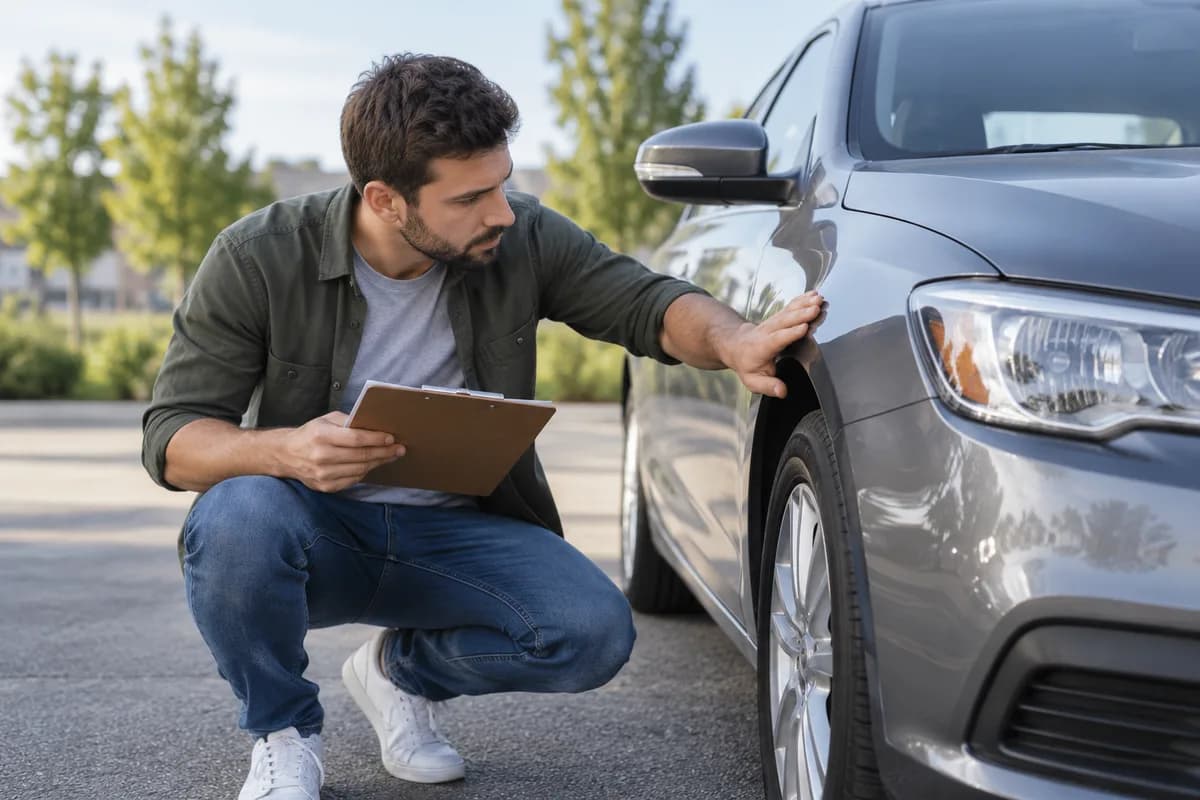
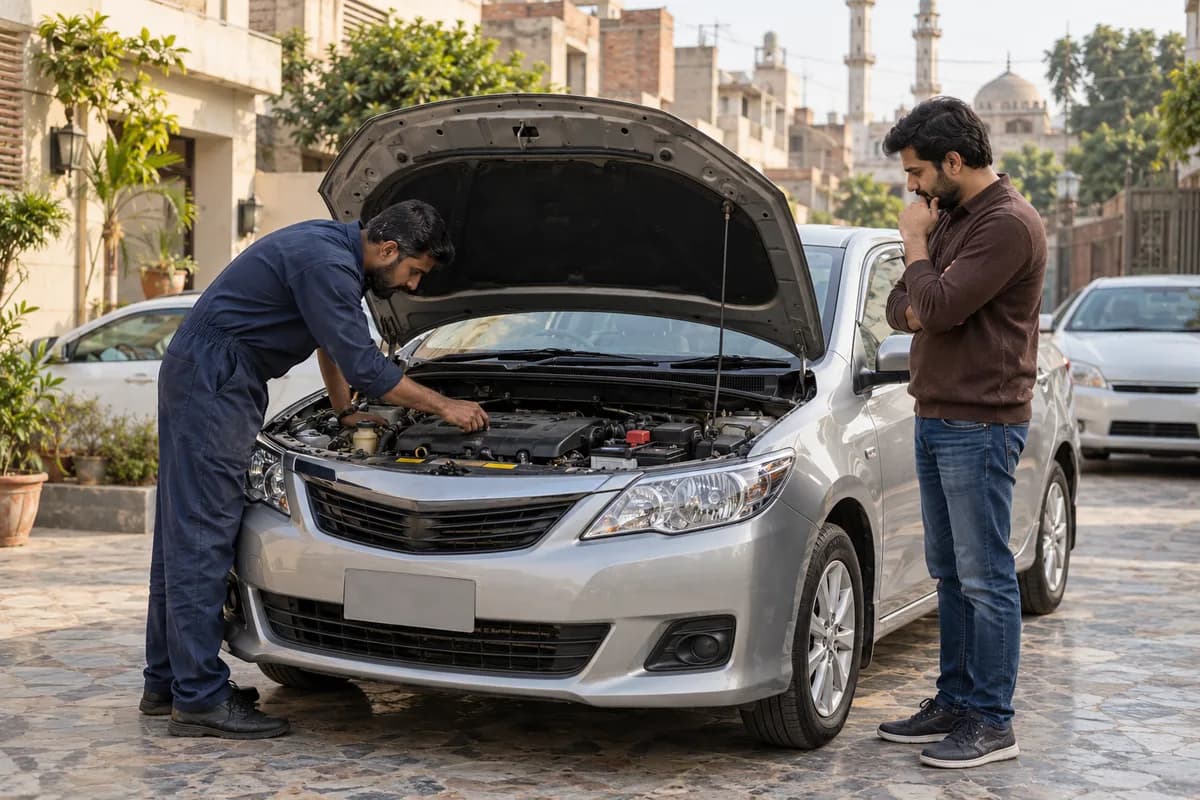
Arrange an Independent Pre-Purchase Inspection
Ask a qualified mechanic to inspect:
A seller's inspection report should not automatically replace an independent assessment.
- Engine
- Transmission
- Brakes
- Suspension
- Tires
- Cooling system
- Structural components
- Diagnostic fault codes
- Signs of flood damage
Understand the FTC Buyers Guide
Used car dealers covered by the Federal Trade Commission's Used Car Rule generally must display a Buyers Guide on vehicles offered for sale.
The guide provides important warranty and sale-condition information.
Review it carefully and ensure the final contract is consistent with the representations made.
State consumer protections may provide additional rights.
Compare Used Car Financing
Evaluate:
- Annual percentage rate (APR)
- Loan duration
- Monthly payment
- Total interest
- Fees
- Optional add-ons
- Early payoff conditions
Example Loan
Suppose you finance $15,000 for 60 months at an 8% fixed annual rate with monthly amortization and no additional fees.
The approximate monthly payment is $304, with total interest of about $3,249.
Actual loan offers depend on creditworthiness, lender policies, and market conditions.
Use our Car Loan Calculator.
Compare Dealership vs Private Seller
Dealership Purchase
Potential advantages include financing availability, inventory choice, and certain consumer protections.
However, dealer fees and optional products can increase costs.
Private Seller Purchase
Private sellers may offer competitive prices, but buyers should pay close attention to title verification, liens, and available legal protections.
Never assume that every private sale includes warranty rights.
Complete Title and Registration
Requirements vary by state.
Generally, investigate:
Confirm the process with your state's Department of Motor Vehicles or equivalent agency.
- Properly assigned title
- Lien release, if applicable
- Bill of sale, where required
- Odometer disclosure rules
- Sales or use taxes
- Insurance requirements
- Registration deadlines
- Emissions or safety inspections, where applicable
Used Car Buying Checklist for USA
Marks stay on this page and clear on reload. They record your notes; they do not certify the vehicle’s condition.
Frequently Asked Questions
What is the safest way to buy a used car in the USA?
Verify the VIN and title, review vehicle history, obtain an independent inspection, confirm the full price, and follow your state's title-transfer requirements.
Is a clean title enough to prove a car is safe?
No. A clean title does not guarantee that a vehicle has never experienced damage or mechanical problems.
Can I buy a used car without a credit history?
Cash purchases may be possible. Financing eligibility depends on the lender and may require alternative documentation or a qualified co-borrower.
Are used cars covered by lemon laws?
Protections vary by state and transaction. Some states provide specific used-car protections, while others have more limited rules.
How much are taxes when buying a used car?
Tax treatment and rates depend on the state and sometimes local jurisdiction. Check official state guidance rather than assuming a nationwide rate.
Should I buy a used car with over 100,000 miles?
It may be reasonable if the vehicle has strong maintenance records, passes inspection, and is priced appropriately.
Conclusion
A successful used car purchase in the United States depends on researching the vehicle, verifying its legal status, inspecting its mechanical condition, and understanding the full transaction cost.
Never let an attractive monthly payment distract from the total amount you will spend.
Explore our Used Car Buying Guides and Car Affordability Calculator.
Continue your buying research
Use the inspection checklist, compare financing, and calculate the full ownership budget before committing.
Sources and further reading
- FTC: buying a used car from a dealer ↗
- DOJ: NMVTIS approved vehicle history providers ↗
- NHTSA: safety recall lookup ↗
Examples are hypothetical unless explicitly stated. Prepared with AI assistance and source research; no independent professional review is claimed. Verify current rules and contract terms for your situation. Read the full disclaimer.
Save the guide, collect the missing evidence, and revisit your numbers before committing.